Each year, here at XIST2, we take a look back at the previous year’s design trends and look to the future to see what is coming to ensure we are creating designs that are contemporary but also future-proof. So it’s that time again where we pick out some of our favourite trends predictions for 2021 and beyond.
Motion Logos
With the digital landscape growing year upon year we are seeing an increase in brands creating motion logos. It can be an opportunity to showcase more of what your business does by animating through a series of icons before resting on your main logo. Or it could be used as a loading animation. Sometimes having an animated logo can be the difference between catching a users eye so they visit your website, or moving on to a competitor’s website.

Future Retroism
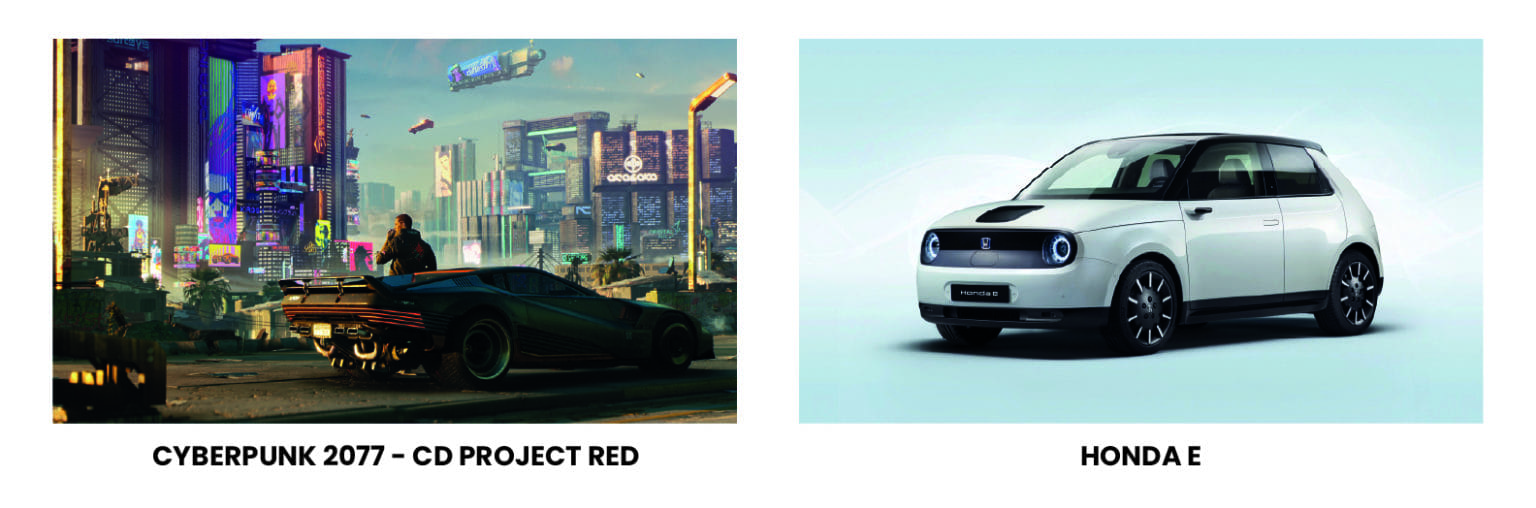
Future Retroism has been a trend coming out of the woodwork for quite some time, It is a trend that not only appears in graphic design but also in other mediums such as Film & TV (Blade Runner 2049), game design (Cyberpunk 2077), and even Car Design (Honda E)! But what is it?
Well, think of it as a kind of mashup of design and culture taken from an era such as the ’80s but reimagined as the future!
Stylistically, the trend uses bright colours, typeface seen in the early days of computer led design and can sometimes use clean soft organic lines for a utopian aesthetic or much harder angular lines for a dystopian contrast.
3D Illustrations & Animations
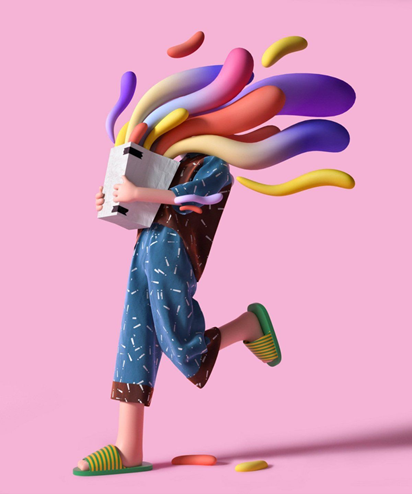
We mentioned this last year and it’s here to stay! 3D has become much more accessible over the past few years, with designers’ computers becoming more powerful and 3D software becoming cheaper, designers and illustrators have been able to take a step into the 3rd dimension and bring them to your screens! Tools such as Spline are also making it even easier to bring real time 3D to your screens.
Glassmorphism
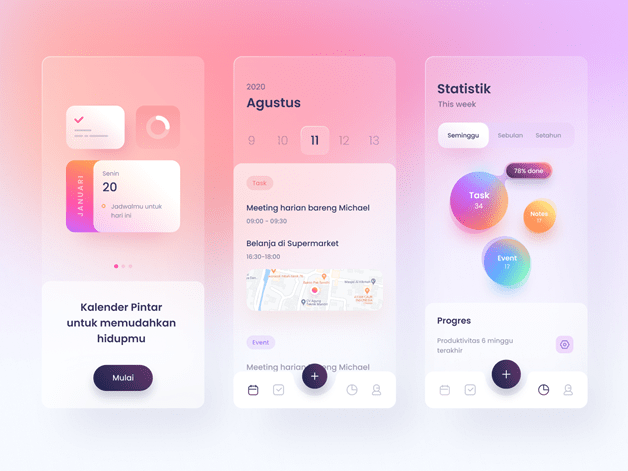
First seen on the infamous Windows Vista OS, Glassmorphism gives the effect of frosted glass being laid over images through ‘background blur’. This enables designers to create layers without having heavy slabs of colour breaking up a screen which was very much the trend a few years ago with ‘flat design’. Glassmorphism lends itself to airy and spacious designs
Seamless Surrealism
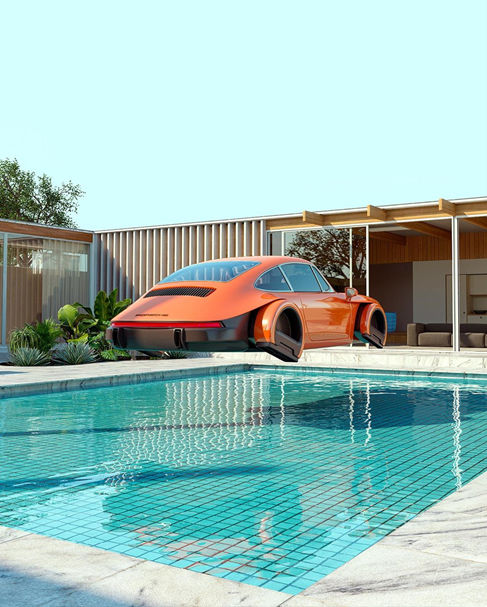
Surrealism is associated with artists such as Salvidor Dali or MC Escher who created images of impossibility, bending physics and creating dreamlike landscapes. They did this by including familiar objects that are very much ‘real’ and warping or placing them in environments in which they don’t belong.
Seamless Surrealism is likely to be prominent in 2021 and expected to be used with expansive open landscapes that evoke exploration and travel, something we have been missing out on during the last year or so due to the pandemic.
Mother Nature
Not so much a design trend and more an idea that will be appearing a lot throughout 2021, is outside space and distant lands. Across the globe we have gone into ‘lockdown’ and are craving to get out and explore the world. In 2021 you will see many brands using this idea in their marketing campaigns.
Nature will be used in photography and illustration to bring the outside to us, breaking down the barrier of walls in our homes and workplaces
Expedia – Lets Take a Trip Campaign: This marketing campaign by travel shopping company Expedia shows a family stuck inside their living room and dreaming of exploration by creating scenes of adventure out of the objects found in their house. The video ensures we can always see the outside world through a window on the left of the room.

Accessible design
The world should be accessible, and this includes the digital world. Accessible design aims to achieve this by ensuring users have the ability to adapt a website, app or other digital medium to suit their needs.
We have seen a move in this direction with many apps and websites creating a ‘dark mode’ interface to help reduce eye strain. But it does not end there, from 2021 accessibility requirements should be met to become compliant with the Accessibility for Ontarians with Disabilities Act (AODA). This means ensuring text sizes and colours have enough contrast and are big enough for those with poor eyesight, ensuring content is structured for screen readers as well as including filters in order to aid colour blindness.
Not only will this ensure your content is socially conscious, but could open your marketing opportunities to a group of users who may not have been able to engage in your businesses content.