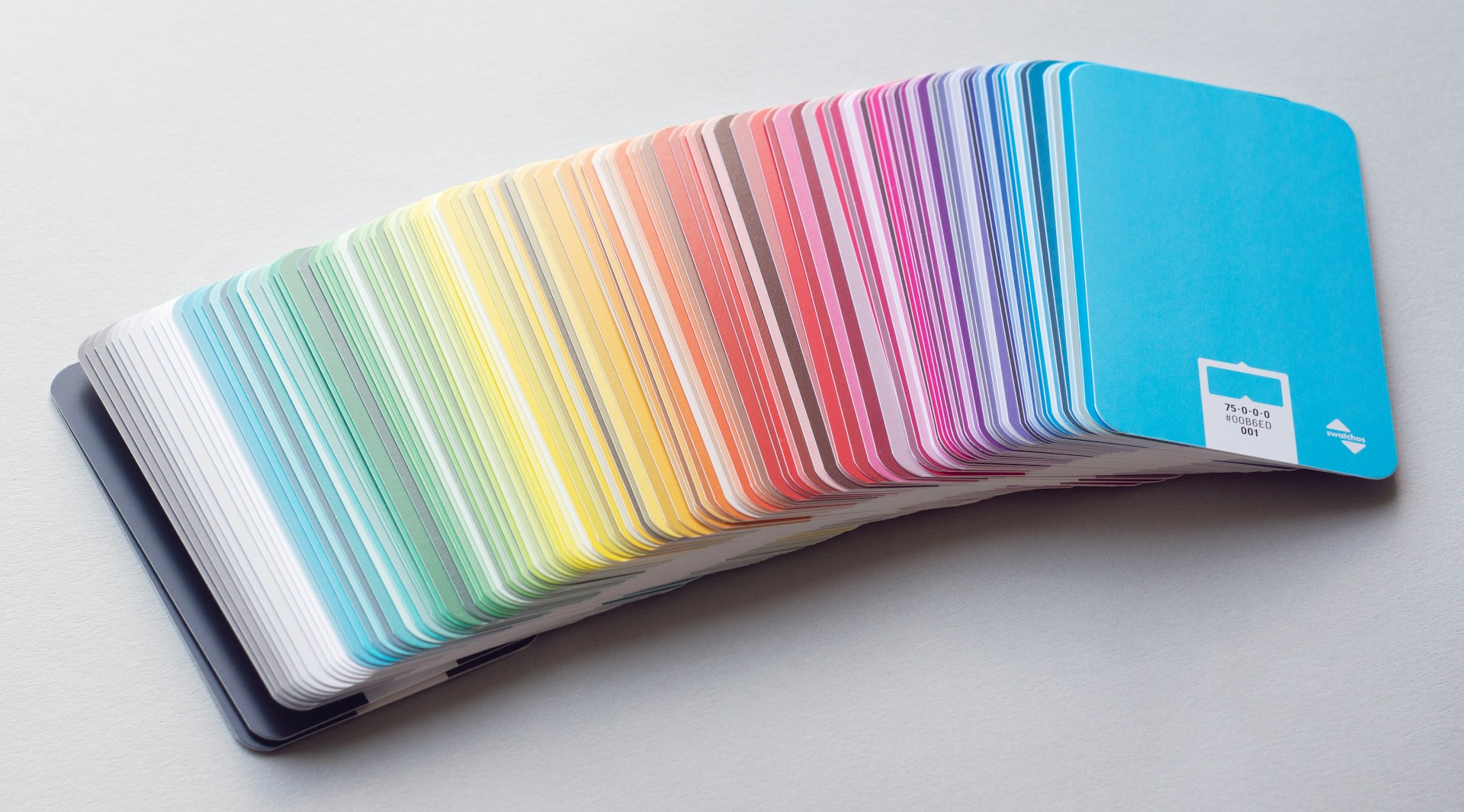
Let’s start by answering the question: it’s never too late to change your colour scheme.
Hypothetically speaking, you can change your website colour scheme as often as you like. Should you change it as often as you want? Absolutely not. Read on to find out why.
Why Colour Schemes Matter for Your Website
Before we give too much away, let’s focus on why colour schemes matter for your website.
You can actually increase your online sales by the colours you pick for your website. Studies have found that 39% of people appreciate the colour of a website the most. Interestingly, 43% of people aged between 18 and 24 want to see the colour purple and another study found that 89% of consumers are more likely to remember the colour of a website than the branding.
We could keep hounding you with statistics, but you get the picture. Here’s a link to read about more of them.
Essentially, people want to see colours, and they want them to be eye-catching. Colours, often subconsciously, evoke feelings and emotions. Well, even consciously, we know colours are attached to meaning – yellow to the sun and happiness, blue to feeling the blues (being sad), red for anger or love (you don’t want to get that mixed up on your website) and black for a deep pit of despair and darkness.
So, of course, colours matter.
If there’s one thing we will say is that website colours should always match your branding.
When Should You Consider Changing Your Colour Scheme?
There’s no “right” or “wrong” time to change your website’s colour scheme, but we wouldn’t do it often if you want a good website. Continuity is essential for branding. The only time we would do it – other than subtle changes – is for a complete rebrand. That’s really the only time you’ll ever see big brands do colour scheme changes, and big brands know what they’re doing.
Still, there are a few indicators it might be time for a change, even if a subtle one:
- your branding has evolved
- your current colours are outdated
- user experience issues
- data shows poor engagement.
Choosing the Right New Colour Scheme
We’ve got some reminders for you of brands that went for a rebrand and a colour scheme change and how shocking it went:
- Tropicana, 2008: Complete rebrand and new colour scheme fail
- MasterCard, 2015: Logo change fail
- Mozilla Firefox, 2017: Logo and colour scheme fail.
If you look at all those failed changes, you’ll see the brands never followed it through. What you can learn from that, especially if you’ve got an established brand, is that changing what people know isn’t always a good idea.
Still, if you’re going to do it, we’d recommend using our web design services in Oxford to get it right. And you should definitely consider our tips:
- Align with Your Brand Identity: Don’t change your brand identity too much. People don’t like big changes – changing the entire brand identity with a rebrand can be so risky.
- Consider User Preferences: Do you know what your customers like? Different demographics respond to different colours. We gave you a glimpse into that with our statistics that 18-24-year-olds prefer to see purple.
- Focus on Accessibility: You still want your website to be user-friendly and accessible. Colours should have a high contrast between the text and the background so people can actually read it. We’ve seen so many websites get this wrong. Not to the point of necessarily not being able to read it entirely, but it’s difficult and nobody wants to squint at the computer screen.
- Test Before You Commit: Always test it before you commit to a colour change. Does it look good on all devices? Do other people think it looks good? More importantly, does it look better than before?
As you can tell, it’s never too late to change your colour scheme – it’s about why, when, and how you’re changing it. As the saying goes ‘If it ain’t broke, don’t fix it.’ Sometimes, a rebrand is good for business, other times, it absolutely doesn’t make sense and you’ll know that when one of your favourite brands changes – it’s almost offensive they’d do it to you!